
Attendance
At St. Alban's School, we believe that attendance is far more than simply being present in school. It is about every child feeling connected, valued, supported and able to flourish. We know that when children attend regularly, they are more likely to achieve academically, develop positive relationships, build confidence and enjoy a greater sense of belonging within our school community.
Our attendance culture is built on child-centred values, positive relationships and evidence-informed practice. We recognise that every child’s circumstances are unique, and whilst many children attend school every day without additional support, others may face barriers that require understanding, compassion and collaborative intervention.
|
|
Attendance is everyone’s responsibility. By working together with children, families, staff, governors and external partners, we create the conditions that enable every child to attend, participate and thrive. |
Our attendance strategy is fully embedded within our school improvement priorities and is underpinned by the Inclusive Attendance Model—the first and only accredited programme providing the pedagogy of practice for inclusive attendance. This enables us to continually develop our practice through research, professional learning and sustained implementation.
Our Inclusive Attendance Culture
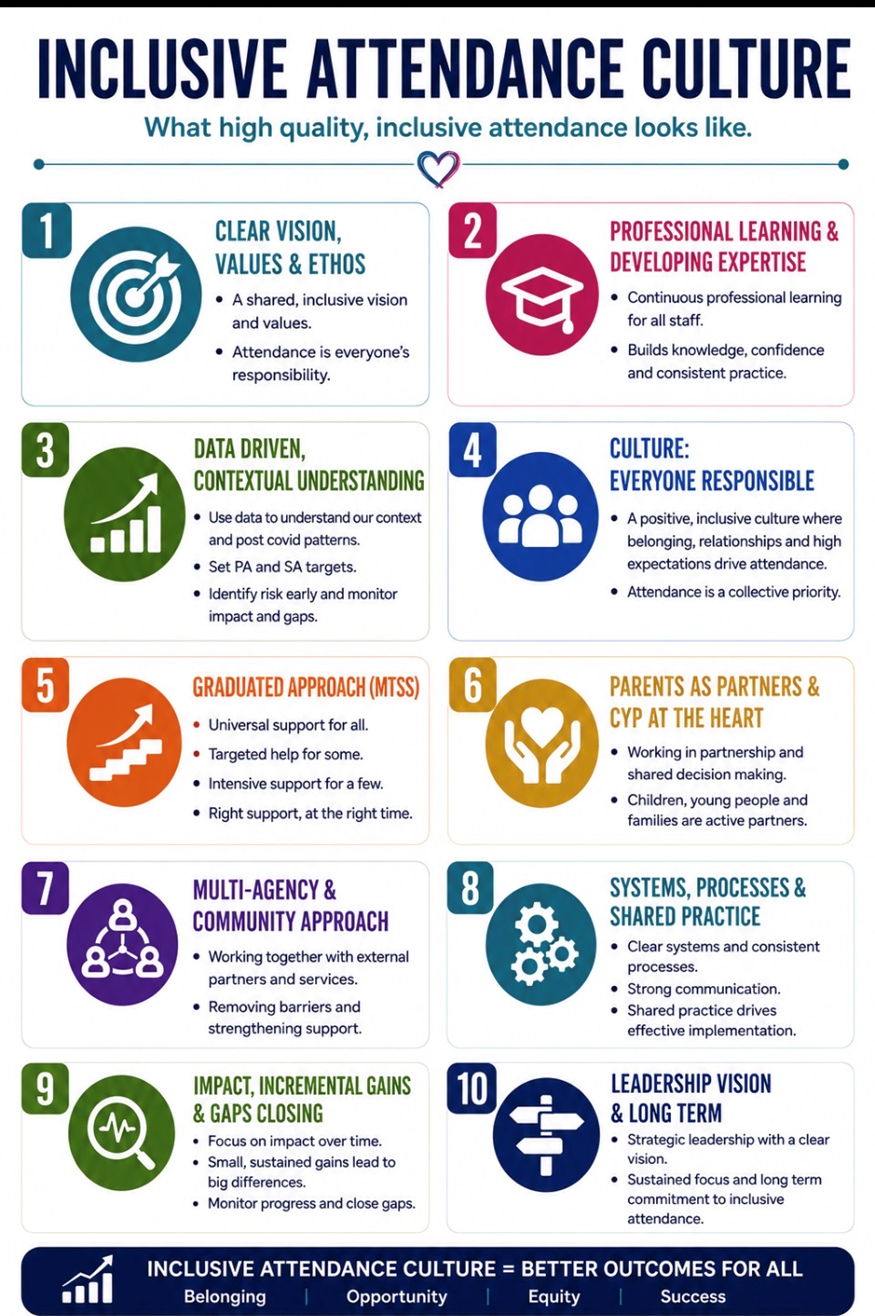
Our inclusive attendance culture is founded upon ten key principles that guide every aspect of our work. These principles ensure that attendance is embedded across leadership, teaching, pastoral care, professional learning and partnership working.
Together they help us create a culture where attendance is everyone’s responsibility and every child feels they belong.
|
Professional Learning and Developing Expertise |
|
|
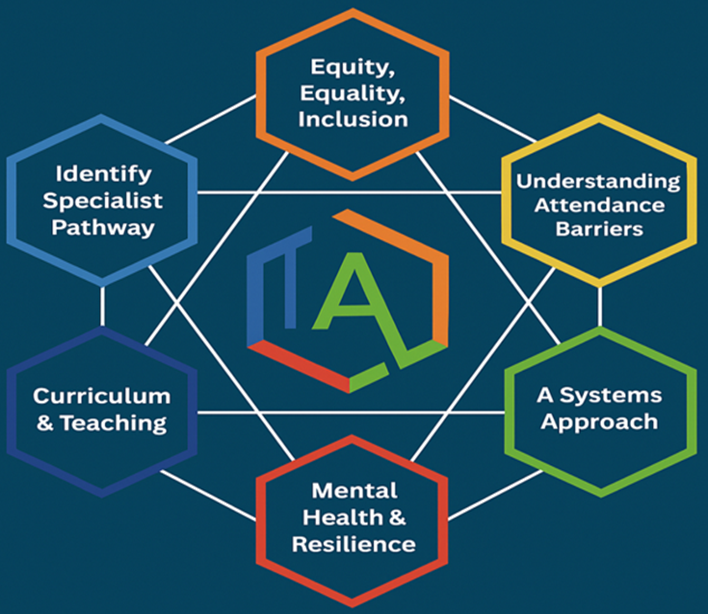
High-quality attendance practice begins with knowledgeable, confident and well-supported staff. The Inclusive Attendance Professional Development Model is central to our attendance strategy and provides continuous professional learning for every member of staff. Through six carefully designed learning modules, staff develop a shared understanding of inclusive attendance, ensuring consistency across the school. Professional learning equips staff with the knowledge, confidence and practical strategies needed to identify barriers, respond effectively and promote positive attendance for every child.
|
|
|
Continuous Improvement
Improving attendance is an ongoing process of reflection, evaluation and development.
Each year, St. Alban's Catholic Primary School participates in the Inclusive Attendance implementation programme, enabling us to review our attendance systems, strengthen our practice and continually improve outcomes for children and families.
Our long-term strategy focuses on embedding sustainable change through evidence-informed decision making, high-quality professional development and collaborative working with local, regional and national partners.
|
|
By continually evaluating our impact, we ensure our attendance practice remains responsive to the changing needs of our school community. |
|
Working Together Strong partnerships are at the heart of inclusive attendance |
|
We work collaboratively with:
|
Children and young people |
|
Parents and carers |
|
|
|
|
|
School staff |
|
Governors |
|
The Local Authority |
|
Health professionals |
|
|
|
|
|
Early Help services |
|
External agencies |
Through open communication, shared decision-making and early intervention, we identify barriers quickly and work together to provide the right support at the right time.
This collaborative approach ensures that attendance is viewed as a shared responsibility rather than solely a school issue.
Multi-Tiered System of Support (MTSS)
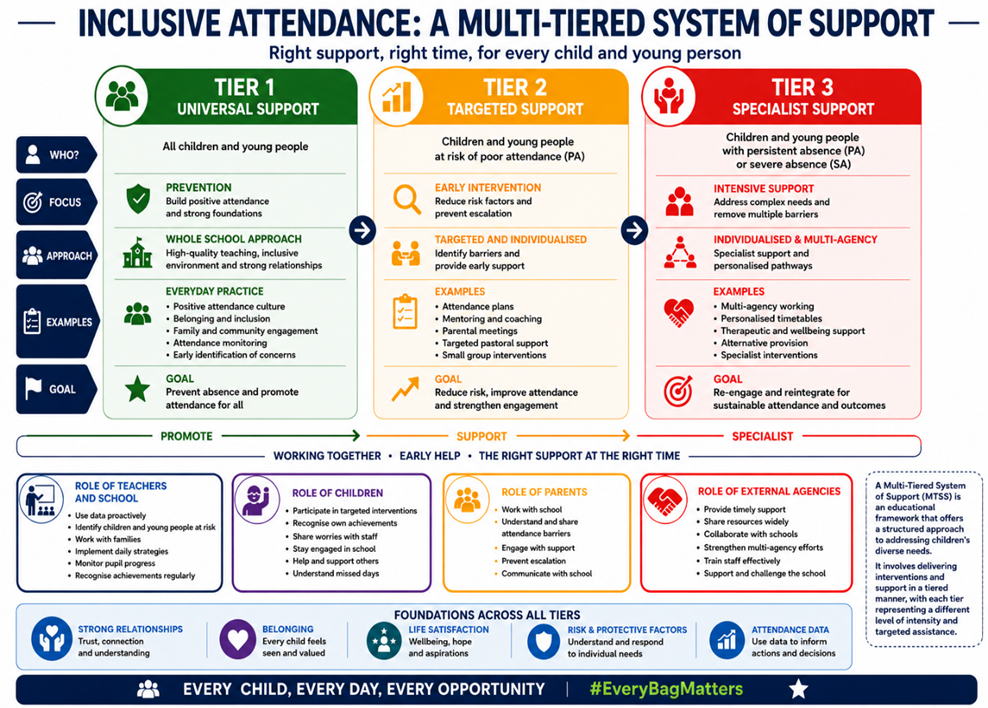
At St. Alban's Catholic Primary School, we use an Inclusive Attendance Multi-Tiered System of Support (MTSS) to ensure every child receives the right support at the right time.
Our graduated approach recognises that while most children benefit from universal support through high-quality inclusive practice, some children and families require additional targeted or specialist support to overcome barriers to attendance.
The MTSS framework enables us to:
|
|
|
identify attendance concerns early through effective use of attendance data; |
|
|
|
|
|
|
|
understand the individual barriers affecting attendance; |
|
|
|
|
|
|
|
provide timely and proportionate interventions; |
|
|
|
|
|
|
|
work collaboratively with children, families and partner agencies; and |
|
|
|
|
|
|
|
regularly review the impact of support to secure positive outcomes. |
|
Our Graduated Response Right support, right time, for every child |
|
|
Celebrating Attendance Recognition, motivation and belonging |
|
At St. Alban's, we believe that recognising positive attendance encourages motivation, strengthens relationships and reinforces a sense of belonging.
Our recognition-based approach celebrates commitment, improvement and engagement rather than focusing solely on percentages or rewards.
We recognise:
|
Good attendance |
|
Improved attendance |
|
Personal progress |
|
Positive engagement |
|
Class achievements |
|
Whole-school success |
By celebrating attendance in meaningful ways, we foster intrinsic motivation and create a positive culture where children feel proud to attend school every day.
Our Commitment
At St. Alban's, we believe that every child deserves to feel welcomed, included and able to achieve their full potential.
Our inclusive attendance culture is built upon:
|
|
|
Child-centred practice |
|
|
|
Positive relationships |
|
|
|
|
|
|
|
|
|
|
|
High expectations |
|
|
|
Shared responsibility |
|
|
|
|
|
|
|
|
|
|
|
Early identification and intervention |
|
|
|
Evidence-informed decision making |
|
|
|
|
|
|
|
|
|
|
|
Continuous professional learning |
|
|
|
Strong partnerships with families and agencies |
|
Why Attendance Matters One of the strongest foundations for success |
|
School attendance is not simply a statutory requirement; it is one of the strongest foundations for educational success, wellbeing and future opportunity.
Every day in school provides valuable opportunities for children to learn, develop relationships and build the knowledge and skills they need for later life.
Regular attendance helps children to:
|
Achieve Academic Success Children who attend school consistently are more likely to make sustained progress, perform well in assessments and improve their long-term life opportunities. |
|
Develop Knowledge and Skills Every lesson contributes to children’s learning and personal development. Missing school can result in valuable learning opportunities being lost and knowledge gaps becoming increasingly difficult to close. |
|
|
|
|
|
Build Friendships and Social Skills School provides an important environment where children develop friendships, communication skills, teamwork and a strong sense of belonging. |
|
Establish Positive Routines Consistent attendance helps children develop responsibility, resilience, organisation and habits that support lifelong success. |
|
|
|
|
|
Benefit from Strong Relationships with Teachers Regular attendance enables teachers to understand children’s needs, monitor progress and provide personalised support that helps every child succeed. |
|
Prevent Gaps in Learning Even occasional absences can interrupt learning. Consistent attendance enables children to build knowledge progressively and confidently over time. |
|
|
|
|
|
Access Wider Opportunities Children who attend regularly are more likely to participate in educational visits, clubs, sports, performances and leadership opportunities that enrich their education and personal development. |
|
Fulfil Shared Legal Responsibilities Parents and carers have a legal responsibility to ensure their child attends school regularly. At St. Alban's School, we work alongside families to provide support, guidance and early intervention whenever attendance concerns arise. |
|
Strengthen Our School Community High attendance contributes to a positive school culture where children feel connected, supported and inspired to achieve. Excellent attendance benefits individual children, families and the wider community. |